Key Takeaways
- 1Ramming mass is a dry refractory powder packed into an induction furnace to form its lining.
- 2Silica, neutral and basic types suit different metals. Using the wrong one causes rapid failure.
- 3The lining forms by sintering: heating it so the grains fuse into a solid working face.
- 4How firmly and evenly it is packed largely decides how long the lining lasts.
- 5Rushing the first heat-up can halve lining life, so the sintering schedule is worth following exactly.
Ramming mass is a dry, granular refractory material used to form the monolithic lining of induction furnaces, ladle bottoms and similar metal-melting vessels. It is rammed (compacted) in place around a former, then sintered by the heat of the first melt to form a dense, crack-resistant working lining. Unlike bricks, it has no joints, which is why it is preferred for the high thermal and mechanical stress of coreless induction furnaces.
This guide explains the main types of ramming mass, where each is used, how it sinters, and how to select the correct grade for your furnace and metal.
What is ramming mass used for?
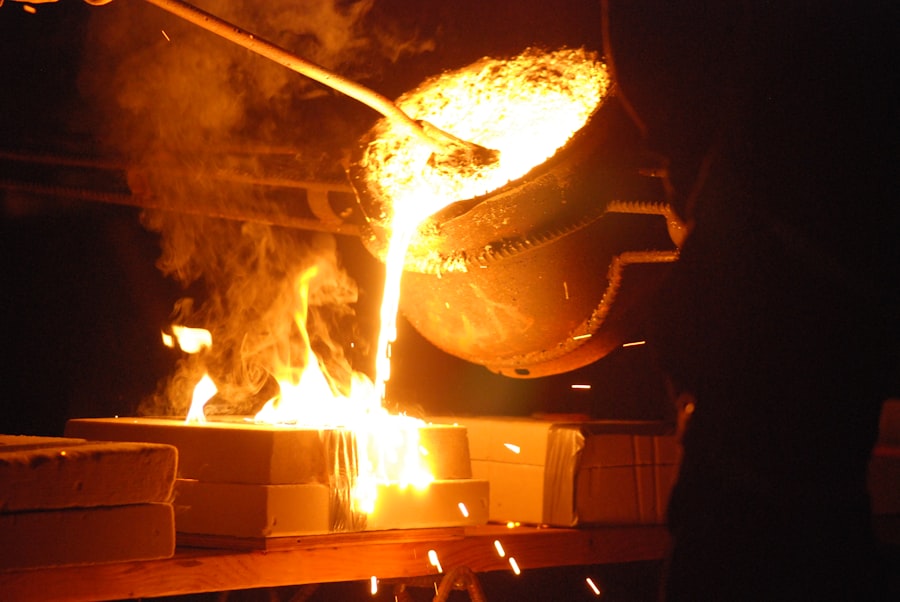
Ramming mass is used to line the crucible of coreless induction furnaces that melt steel, iron, copper, aluminium and other metals. It is also used for furnace spouts, ladle bottoms, and patch repairs. Because it is installed as a single jointless mass, it resists the electromagnetic stirring, thermal cycling and metal penetration that crack a brick lining.
Types of ramming mass
Silica (acidic) ramming mass
Silica ramming mass is the most widely used grade for melting steel and cast iron in coreless induction furnaces. It is based on high-purity quartzite with a boric acid sintering agent. It is acidic, so it suits acidic slags and gives long lining life at lower cost. Typical SiO₂ content is 98% or higher.
Neutral ramming mass
Neutral ramming mass is based on alumina, spinel or high-alumina aggregates. It resists both acidic and basic slags, making it the choice for alloy steels, manganese steel and applications where slag chemistry varies. It offers higher refractoriness and better corrosion resistance than silica grades.
Basic ramming mass
Basic ramming mass is based on magnesia (MgO). It is used for melting high-manganese steel and where strongly basic slags would attack silica or neutral linings. It has the highest refractoriness but needs careful sintering and handling.
How ramming mass sinters
A ramming mass lining develops three zones during the first heats: a sintered (ceramic) zone next to the metal, a transition zone, and a loose powder zone next to the coil. The loose back layer is intentional, it stays compressible to absorb thermal expansion and acts as a safety indicator. Correct sintering, following a controlled first heat-up schedule, is the single biggest factor in lining life.
How to select the right ramming mass
- Metal and slag chemistry: acidic slag → silica; mixed or alloy → neutral; strongly basic → magnesia.
- Furnace size and power: larger, high-power furnaces need higher-grade neutral or magnesia masses.
- Operating temperature: higher tap temperatures push you toward neutral and basic grades.
- Lining life target vs cost: silica is cheapest per tonne; neutral and basic last longer in demanding duty.
Frequently asked questions
What is ramming mass made of?
Silica ramming mass is made from high-purity quartzite (98%+ SiO₂) with a boric acid sintering agent. Neutral grades use alumina or spinel aggregates, and basic grades use magnesia (MgO). All are supplied as a dry, graded powder.
What is the difference between silica and neutral ramming mass?
Silica ramming mass is acidic and best for melting plain steel and cast iron at lower cost. Neutral ramming mass uses alumina or spinel, resists both acidic and basic slags, and suits alloy steels and variable slag chemistry with longer life.
How long does a ramming mass lining last?
Lining life depends on grade, metal, and operating practice. Silica linings commonly give 30 to 80 heats for steel, while neutral and magnesia linings can run longer in demanding duty. Correct sintering and consistent operation are the main drivers of life.
Need help selecting the right ramming mass for your induction furnace? Talk to the Shanker Agencies engineering team with your furnace size, metal and slag details.
Need Expert Refractory Advice?
45+ years of expertise · Authorized CUMI, Crown Ceramics & Divine Cerawool dealer
Have questions about the topics in this article? Our refractory engineers review your specific application and recommend the right solution, no obligation.
Frequently Asked Questions
What is ramming mass made of?
Silica ramming mass is made from high-purity quartzite (98%+ SiO₂) with a boric acid sintering agent. Neutral grades use alumina or spinel aggregates, and basic grades use magnesia (MgO). All are supplied as a dry, graded powder.
What is the difference between silica and neutral ramming mass?
Silica ramming mass is acidic and best for melting plain steel and cast iron at lower cost. Neutral ramming mass uses alumina or spinel, resists both acidic and basic slags, and suits alloy steels and variable slag chemistry with longer life.
How long does a ramming mass lining last?
Lining life depends on grade, metal, and operating practice. Silica linings commonly give 30 to 80 heats for steel, while neutral and magnesia linings can run longer in demanding duty. Correct sintering and consistent operation are the main drivers of life.